Overview
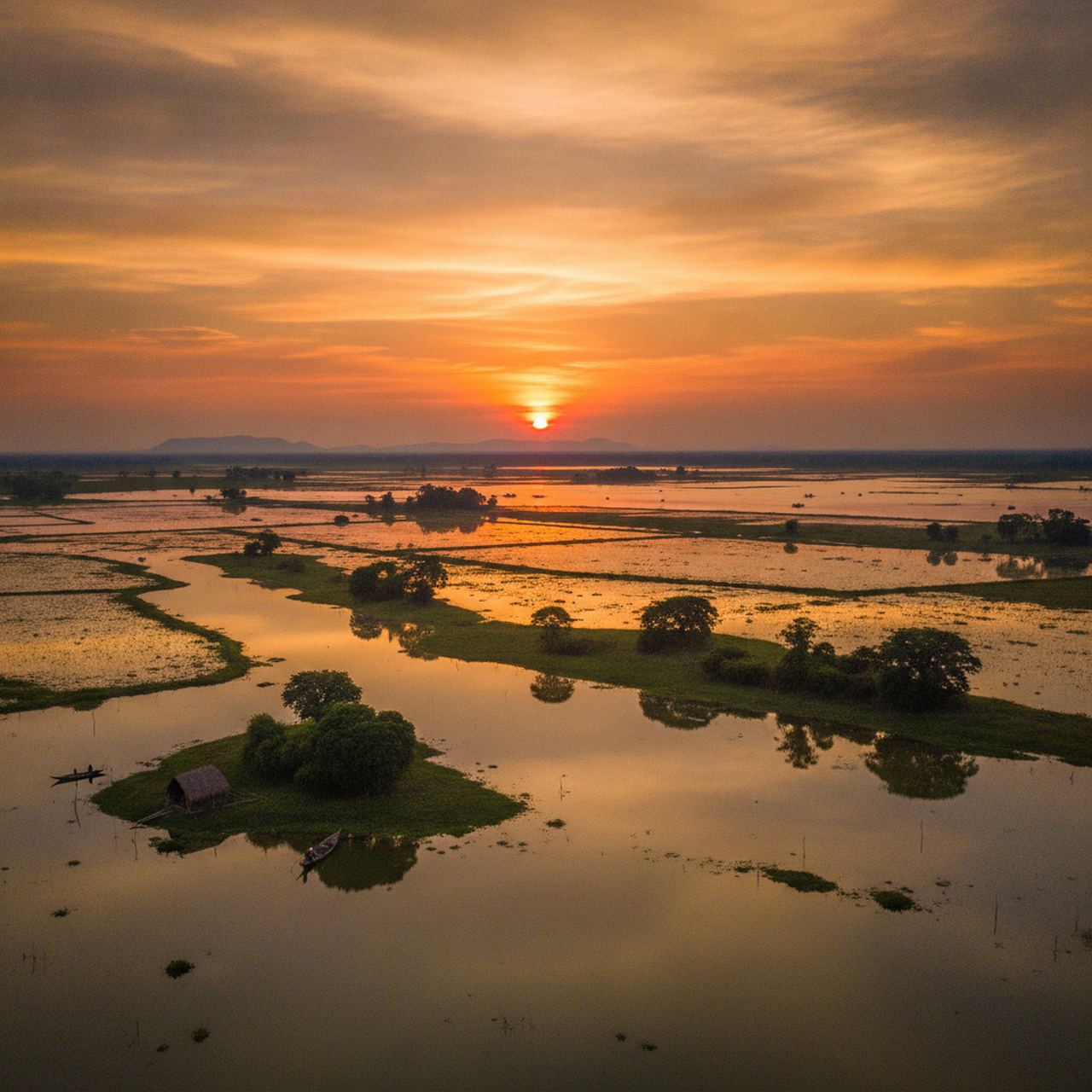
Hakaluki Haor is one of Bangladesh's largest inland freshwater wetlands, a sprawling ecosystem that transforms dramatically with the seasons. During the monsoon, the haor becomes a vast, shimmering inland sea where small villages perched on elevated mounds appear as floating islands. The horizon stretches endlessly, offering a sense of immense scale rarely found elsewhere in the country. It is a place of profound quiet, punctuated only by the sound of water lapping against traditional wooden boats and the distant calls of fishermen.
As the waters recede in the winter, the landscape shifts into a mosaic of 'beels' (depressions) and lush grasslands. This is when the haor truly comes alive for naturalists, as it serves as a critical stopover for thousands of migratory birds traveling the East Asian-Australasian Flyway. Visitors can witness massive flocks of waterfowl, including rare species of ducks and waders, feeding in the shallow waters. The terrestrial scenery of grazing cattle and local life against the backdrop of the distant tea-garden hills creates a serene, pastoral atmosphere.
History & context
Hakaluki Haor is a designated Ecologically Critical Area (ECA), holding immense importance for its biodiversity and its role in the regional economy. Geographically, it is located in the Sylhet Division, spanning the districts of Moulvibazar and Sylhet. The name 'Hakaluki' is believed to be rooted in local folklore, though the site is most significant for its complex hydro-geological structure formed by the overflow of the Kushiyara and Sonai-Bardal rivers. For centuries, it has been the primary source of livelihood for thousands of people, supporting one of the most productive inland fisheries in Bangladesh and providing vital winter grazing land for livestock from surrounding districts.
Getting there
Travel from Dhaka by taking a train or bus bound for Sylhet or Moulvibazar. The most convenient access point is via Kulaura railway station. From Kulaura, you can hire a local CNG auto-rickshaw or a jeep to reach key entry points like Borolekha or the areas near the Fenchuganj power plant. During the monsoon, boat rentals are available from these points to explore the interior of the haor.
Travel tips
- Carry binoculars and a long-lens camera if visiting during the winter bird migration.
- Hire a local boatman early in the morning for the best chance to spot wildlife and avoid the midday heat.
- Wear sunscreen and a wide-brimmed hat, as there is very little shade on the open water.
- Ensure you bring sufficient drinking water and snacks, as shops are non-existent once you are deep within the haor.
- Respect the ecosystem by not discarding plastic or disturbing the nesting sites of the birds.
More lake destinations
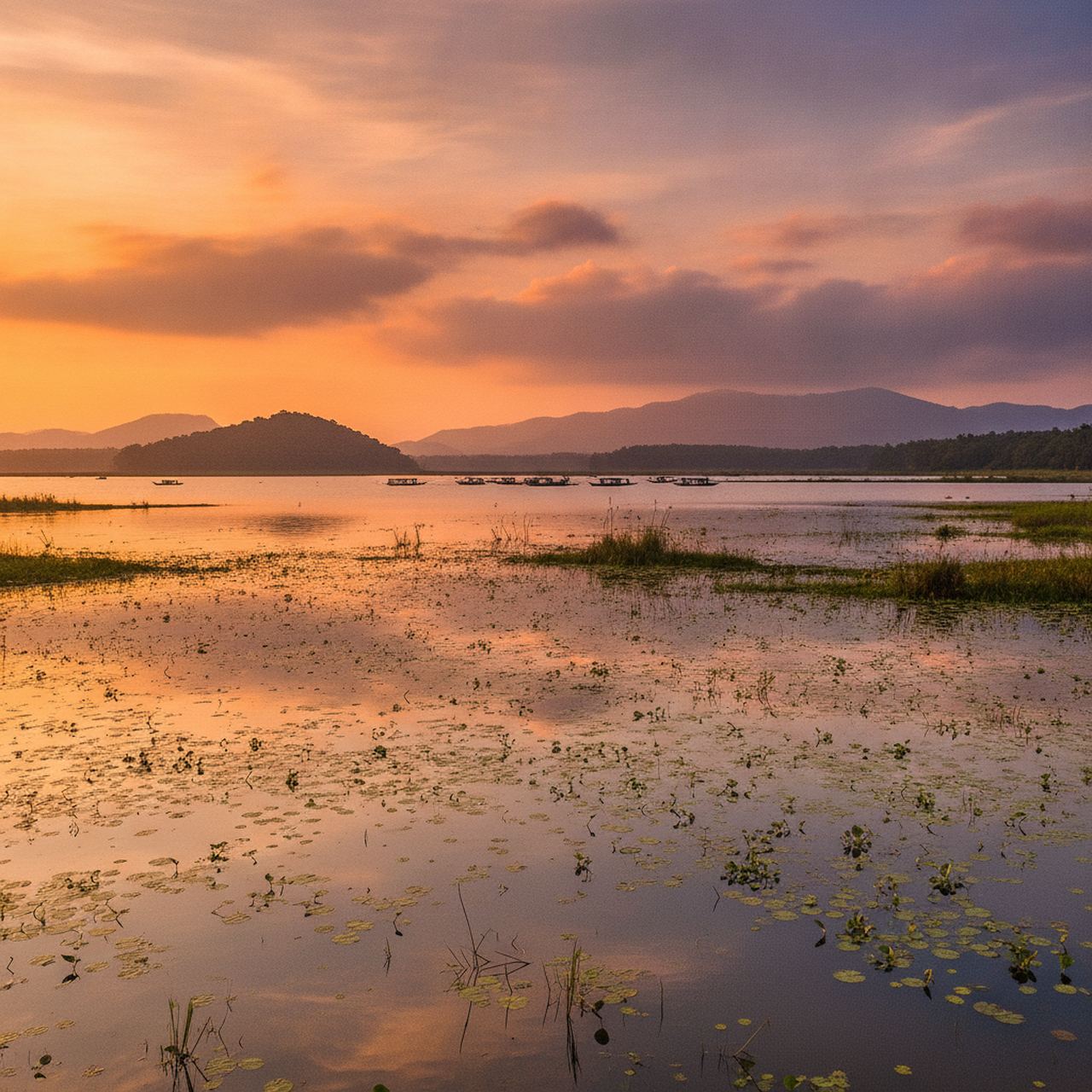
Tanguar Haor
Bangladesh’s crown jewel of wetlands, offering a majestic expanse of freshwater, swamp forests, and migratory bird sanctuaries.
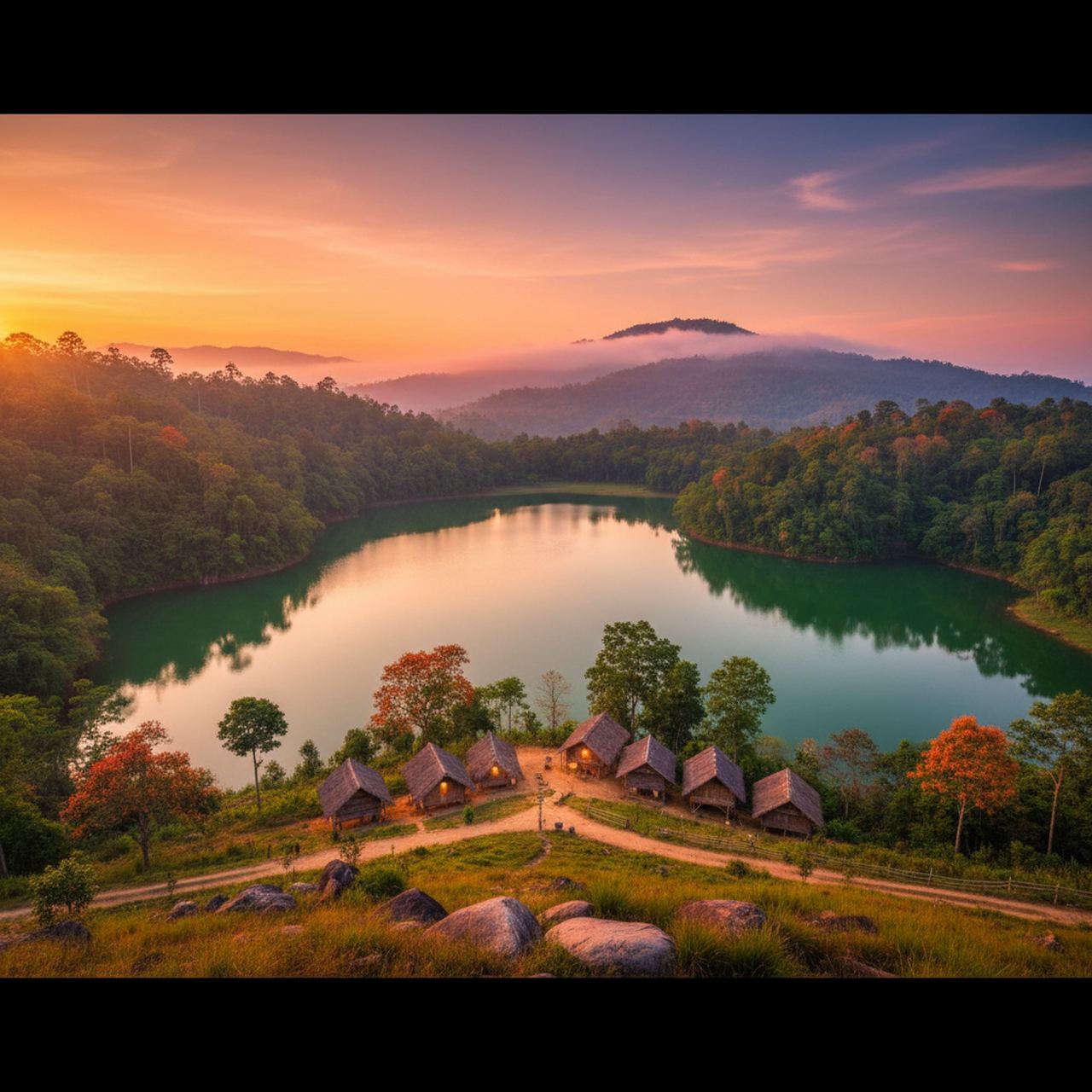
Boga Lake
A mythical, deep-blue tectonic lake perched 1,246 feet high in the Bandarban hills, offering breathtaking views and serene isolation.
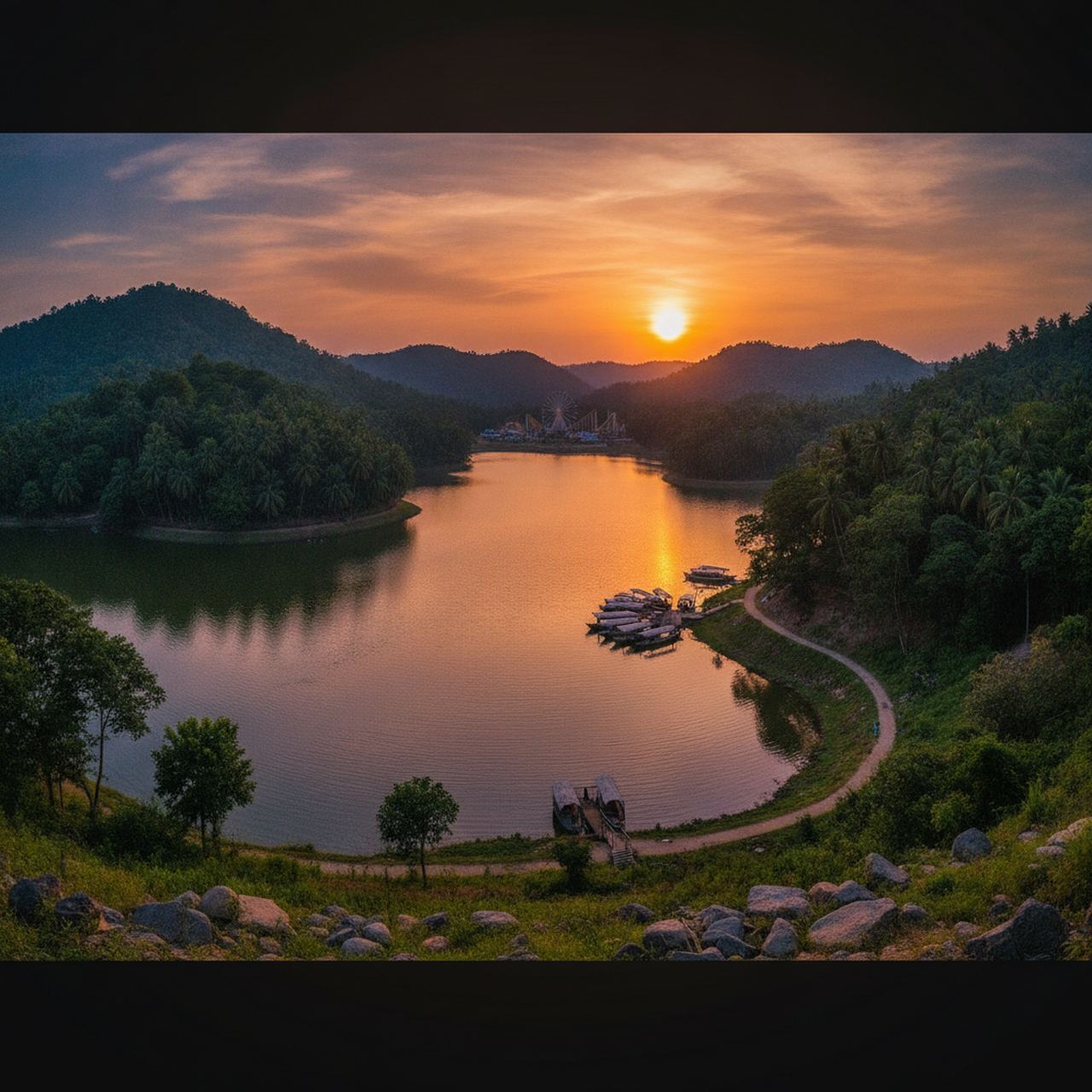
Foy's Lake
A scenic man-made lake nestled in emerald hills, offering boat rides, nature trails, and a peaceful escape in the heart of Chittagong.