Overview
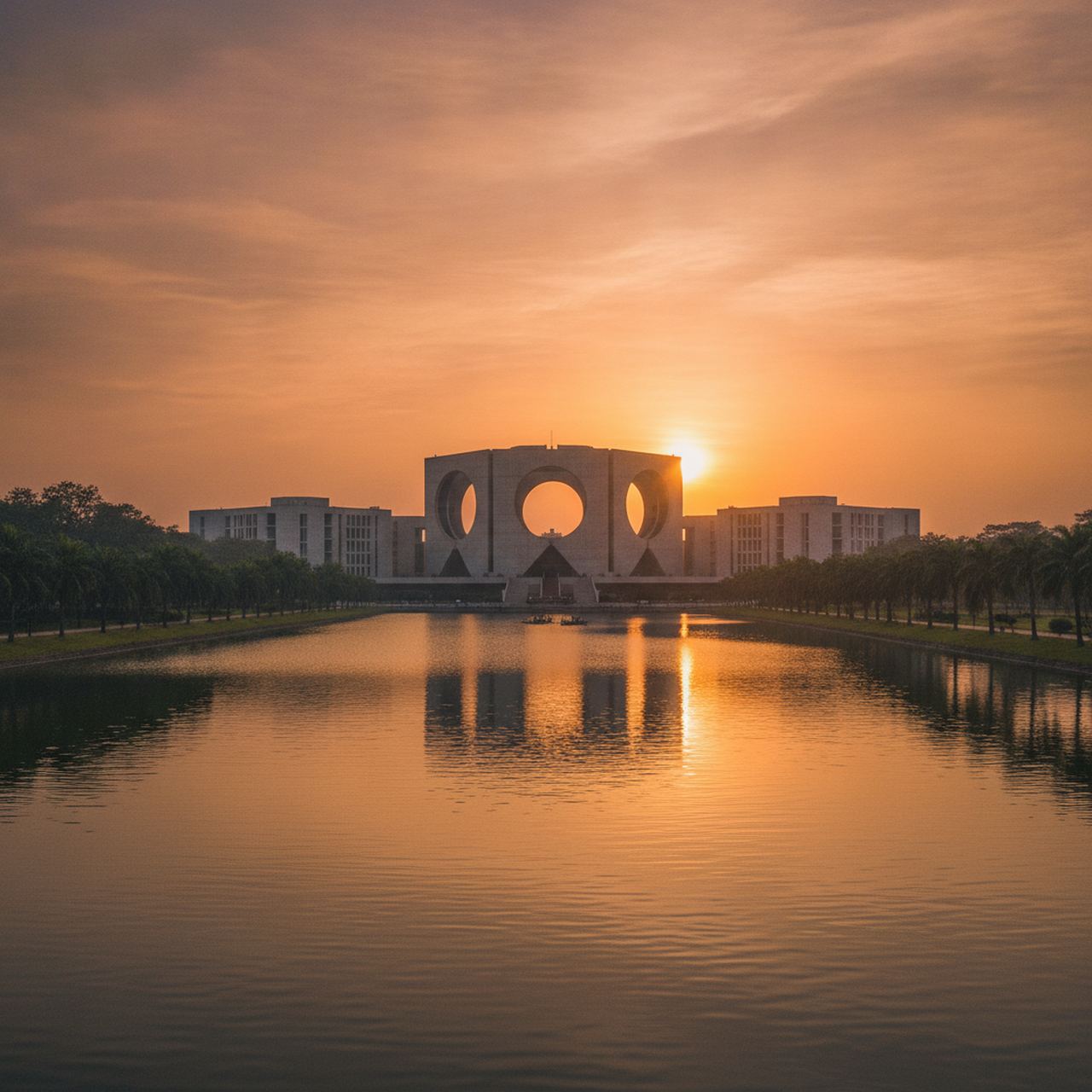
The Jatiya Sangsad Bhaban, or National Parliament House, stands as a monumental achievement of modern architecture, designed by the world-renowned American architect Louis Kahn. Rising from a man-made lake, the massive concrete structure is a masterclass in the use of light and geometric shapes. Circular and triangular openings allow natural light to flood the interiors, creating a spiritual atmosphere within a secular space. Walking around the perimeter, visitors are struck by the building’s fortress-like presence and its seamless integration with the surrounding water and Crescent Lake park.
Visitors cannot usually enter the main assembly hall without special permits, but the exterior experience is profound. As the sun sets, the reflection of the marble-lined concrete on the dark water creates a serene, symmetrical view that is a favorite for photographers. The South Plaza and the surrounding gardens provide a rare open space in the middle of dense Dhaka, where one can truly appreciate the scale of Kahn’s vision—a symbol of democracy that feels both ancient and futuristic. It is not just a government building; it is a profound piece of art.
History & context
Construction of the complex began in 1961 when Bangladesh was still East Pakistan. Initially commissioned by the Pakistani government, the project was interrupted by the Bangladesh Liberation War in 1971. Following independence, the new government under Sheikh Mujibur Rahman decided to complete the structure as a symbol of the new nation's pride and democratic aspirations. Completed in 1982, it remains one of the largest legislative complexes in the world. The design famously ignores traditional regional motifs in favor of universal geometric forms, yet it remarkably complements the deltaic landscape of Bangladesh.
Getting there
Located in the Sher-e-Bangla Nagar area of Dhaka, the complex is easily accessible by rickshaw, CNG auto-rickshaw, or ride-sharing services from any part of the city. Most visitors start their walk from the Bijoy Sarani metro station or the Manik Mia Avenue side.
Travel tips
- Inside access requires a permit from the Parliament Secretariat, usually requested weeks in advance.
- Visit in the late afternoon to catch the golden hour light on the concrete walls.
- The Manik Mia Avenue side is the best spot for wide-angle photography of the main facade.
- Expect heavy security presence; follow all signage regarding restricted walking zones.
- Wear comfortable shoes as the perimeter of the complex is quite large for walking.
More heritage destinations
Lalbagh Fort
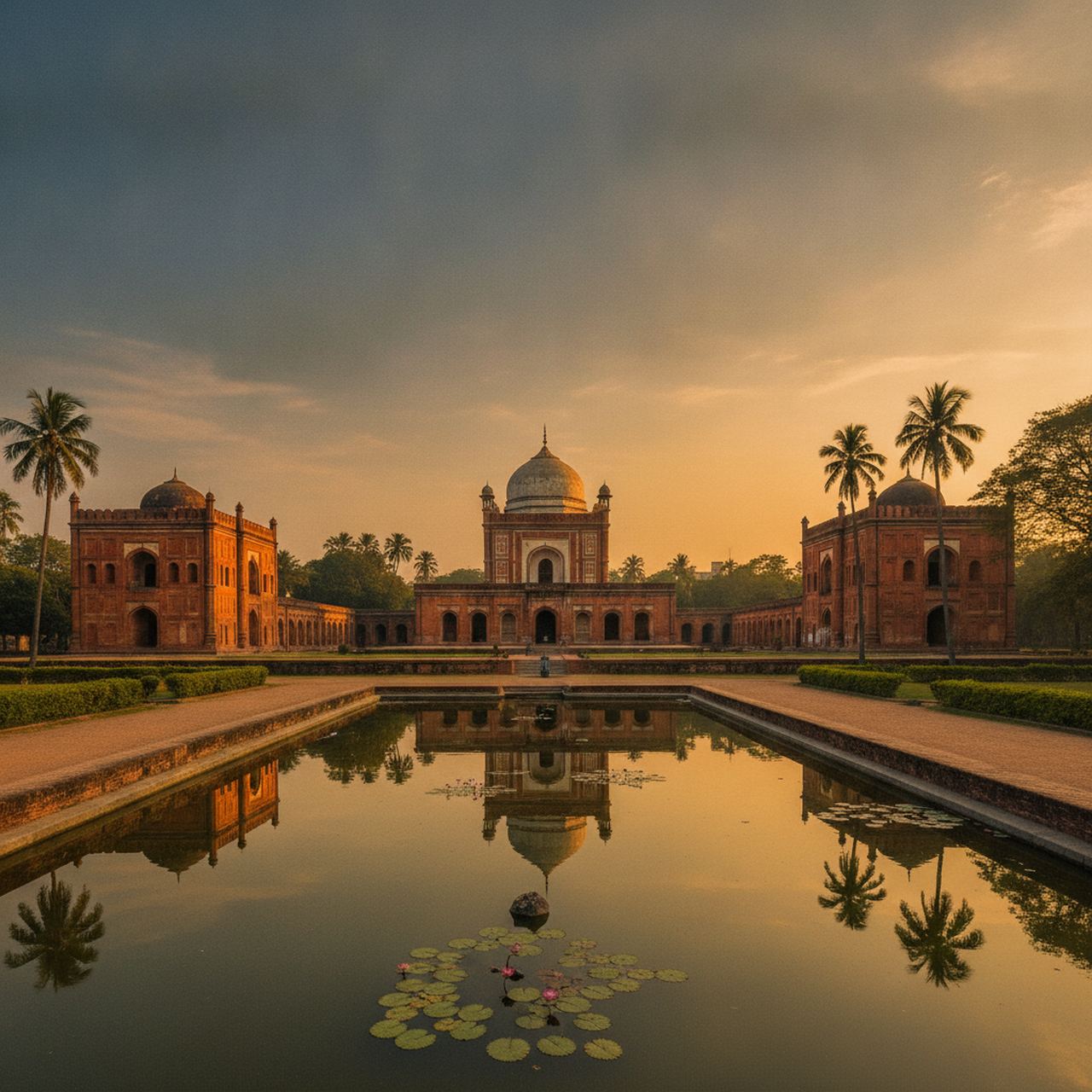
An iconic 17th-century Mughal fortress in Old Dhaka featuring grand monuments, lush gardens, and a storied royal history.
Ahsan Manzil
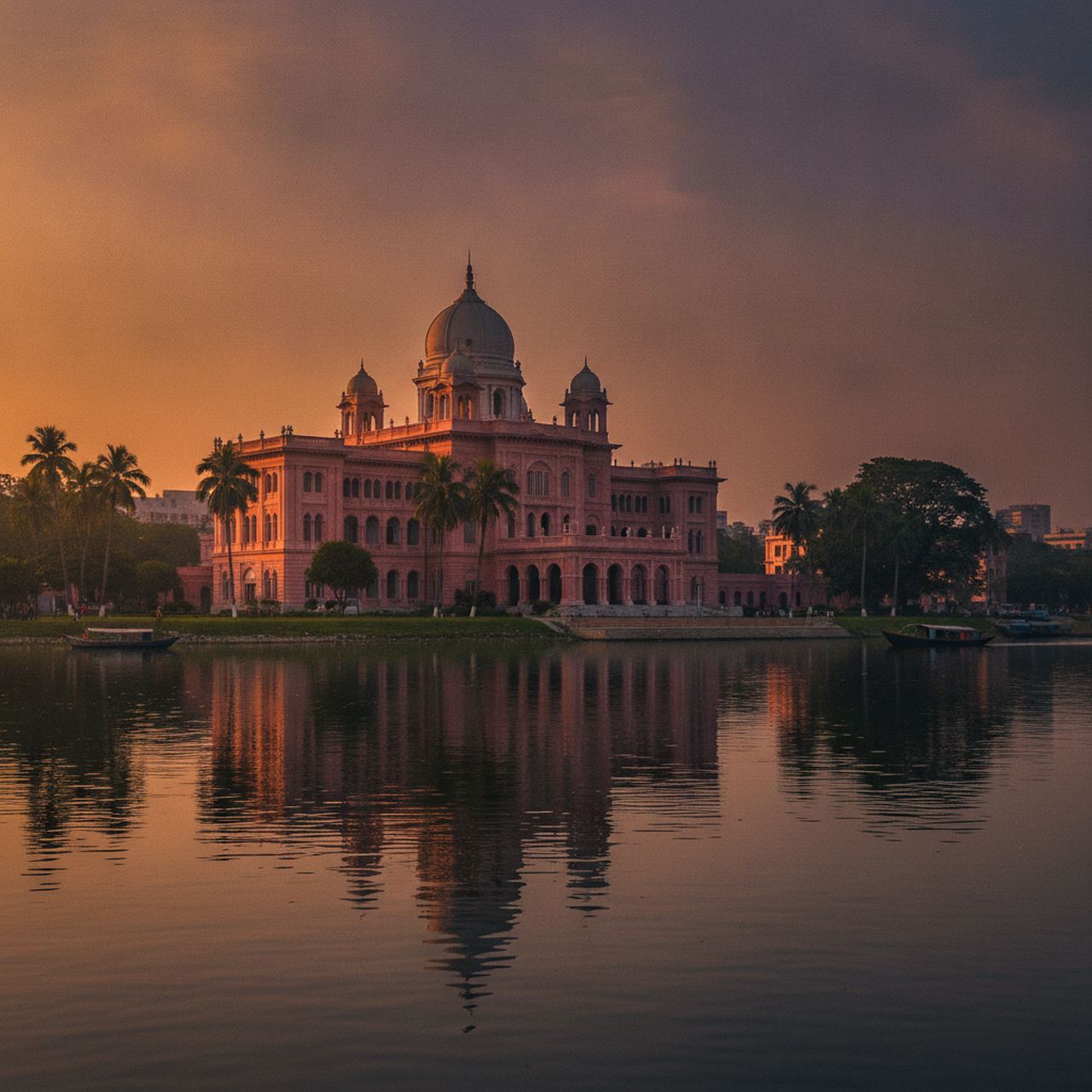
Explore the 'Pink Palace,' a stunning Indo-Saracenic monument on the Buriganga River that served as the grand seat of the Nawabs of Dhaka.
Somapura Mahavihara
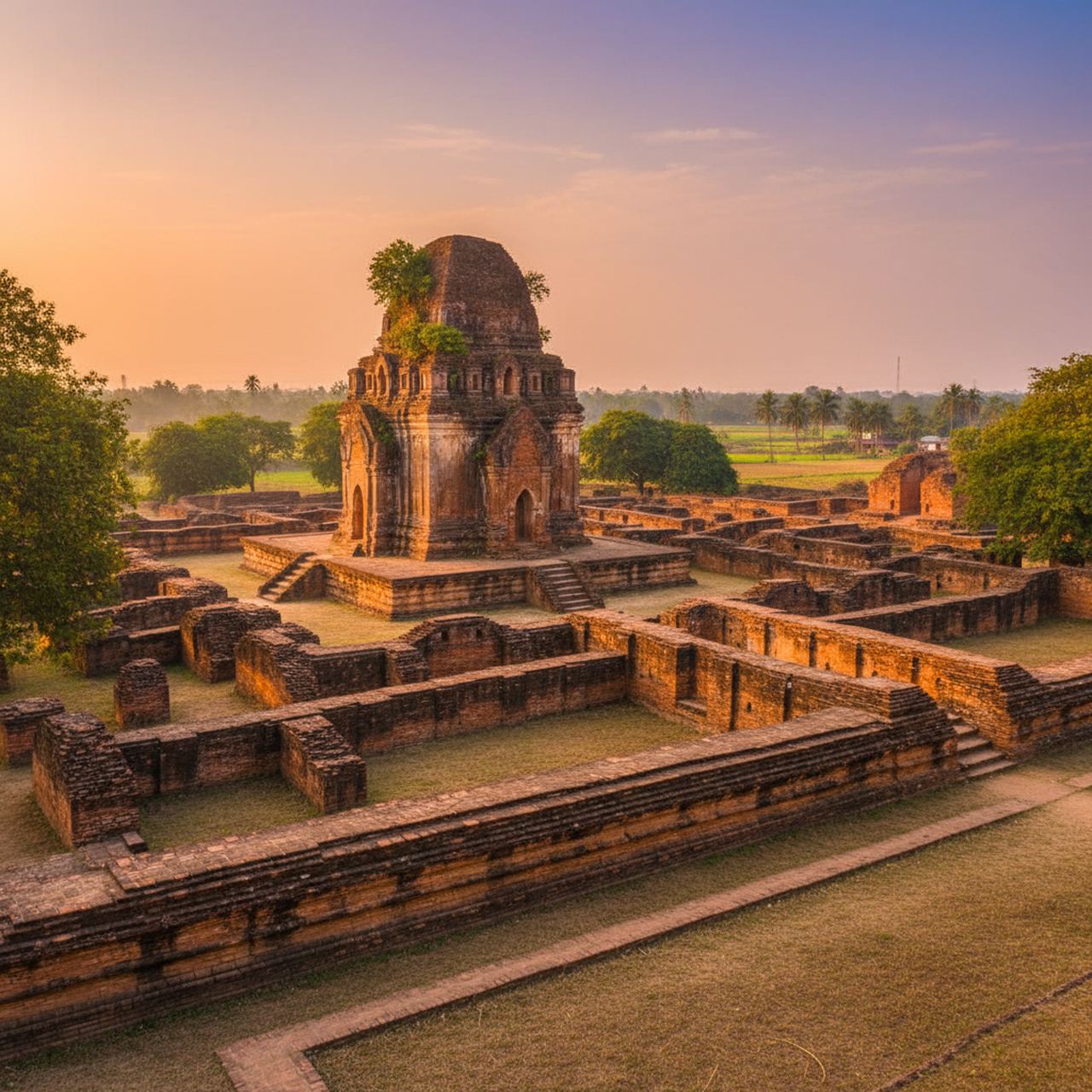
Explore the majestic 8th-century ruins of Somapura Mahavihara, a UNESCO World Heritage site and a cradle of ancient Buddhist learning.