Overview
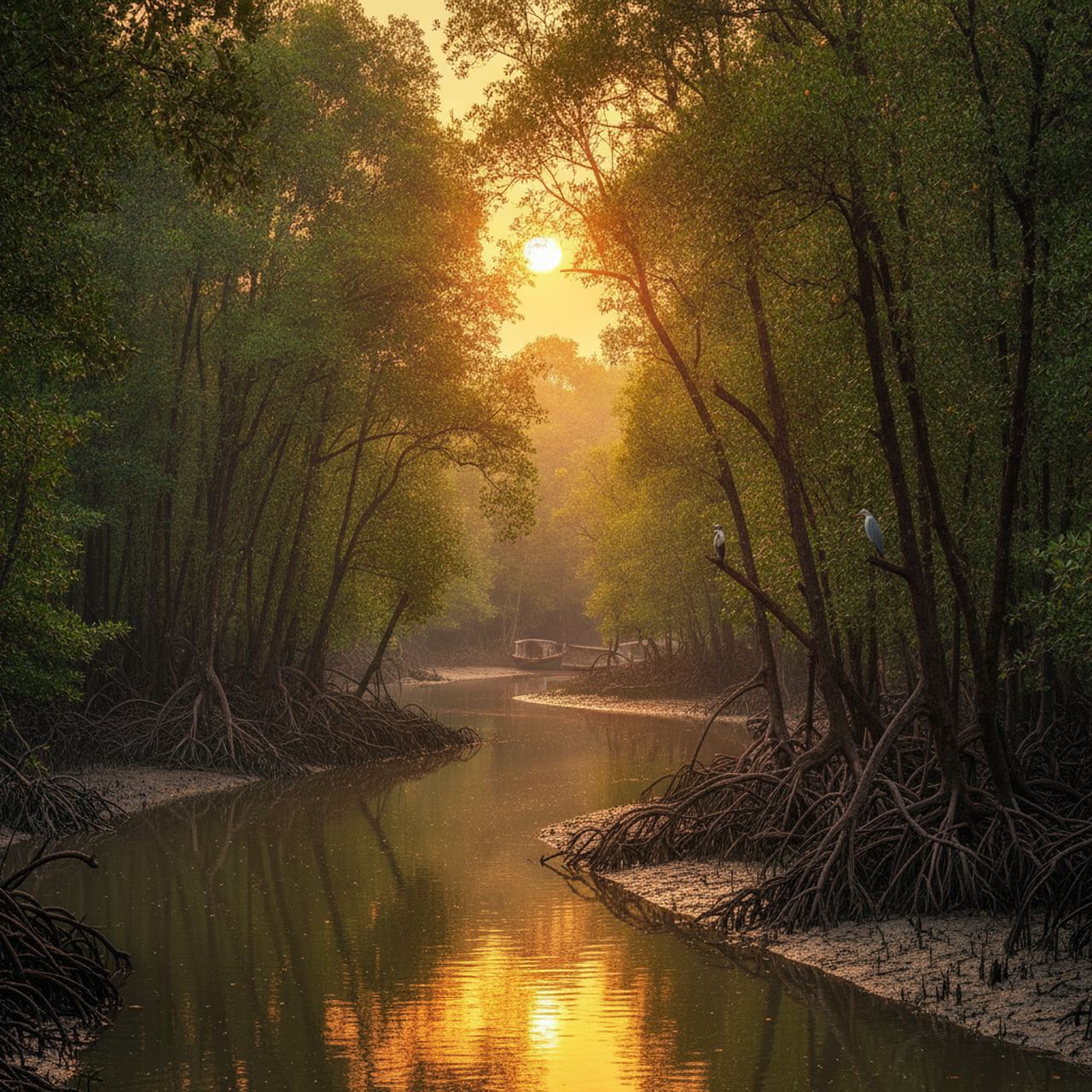
The Sundarbans, the world's largest contiguous mangrove forest, is a mystical labyrinth of tidal waterways, mudflats, and thick canopy. Stretching across the delta of the Ganges, Brahmaputra, and Meghna rivers, this UNESCO World Hope site offers a landscape that shifts twice daily with the tides. Visitors navigate the narrow channels by silent wooden boats, listening for the call of the barking deer or the rustle of the rhesus macaque. The environment is both serene and formidable, defined by the pneumatophores—spiky aerial roots—of the Sundari trees that pierce through the silt.
Exploring the forest is an exercise in patience and observation. While the elusive Royal Bengal Tiger remains the ultimate prize for trackers, the region is teeming with biodiversity, from the formidable saltwater crocodiles basking on the banks to the vibrant kingfishers darting over the water. Wandering through the forest stations like Katka or Hiron Point, one feels a profound sense of isolation and raw natural power. The humid air, the scent of the saline water, and the emerald green of the canopy create an immersive experience that is unlike any other wilderness in South Asia.
History & context
The Sundarbans has historically served as a protective barrier for the coastal populations of Bangladesh against cyclones and tidal surges. Historically, the forest was much larger, but it has been a designated forest reserve since the late 19th century under British colonial administration. Culturally, the region is famous for the legend of Bonbibi, the 'Lady of the Forest,' a deity worshipped by both Hindus and Muslims who enter the jungle to collect honey or wood. This syncretic tradition reflects the shared dangers and respect the local people have for the wilderness and its apex predator, the tiger.
Getting there
From Dhaka, take a domestic flight, a passenger ferry, or a bus to Khulna or Mongla. Most multi-day forest expeditions begin from the Khulna ghat or the Mongla port, where visitors board specialized wooden cruise vessels equipped with cabins and dining facilities for the three-to-four-day journey into the deep forest.
Travel tips
- Book a tour with a reputable operator that includes armed forest guards.
- Wear muted colors like olive, brown, or khaki to blend into the environment.
- Bring high-quality binoculars and a long-lens camera for wildlife viewing.
- Carry insect repellent and a light windbreaker for chilly mornings on the water.
- Maintain absolute silence during forest walks and boat trips through narrow canals.
More forest destinations
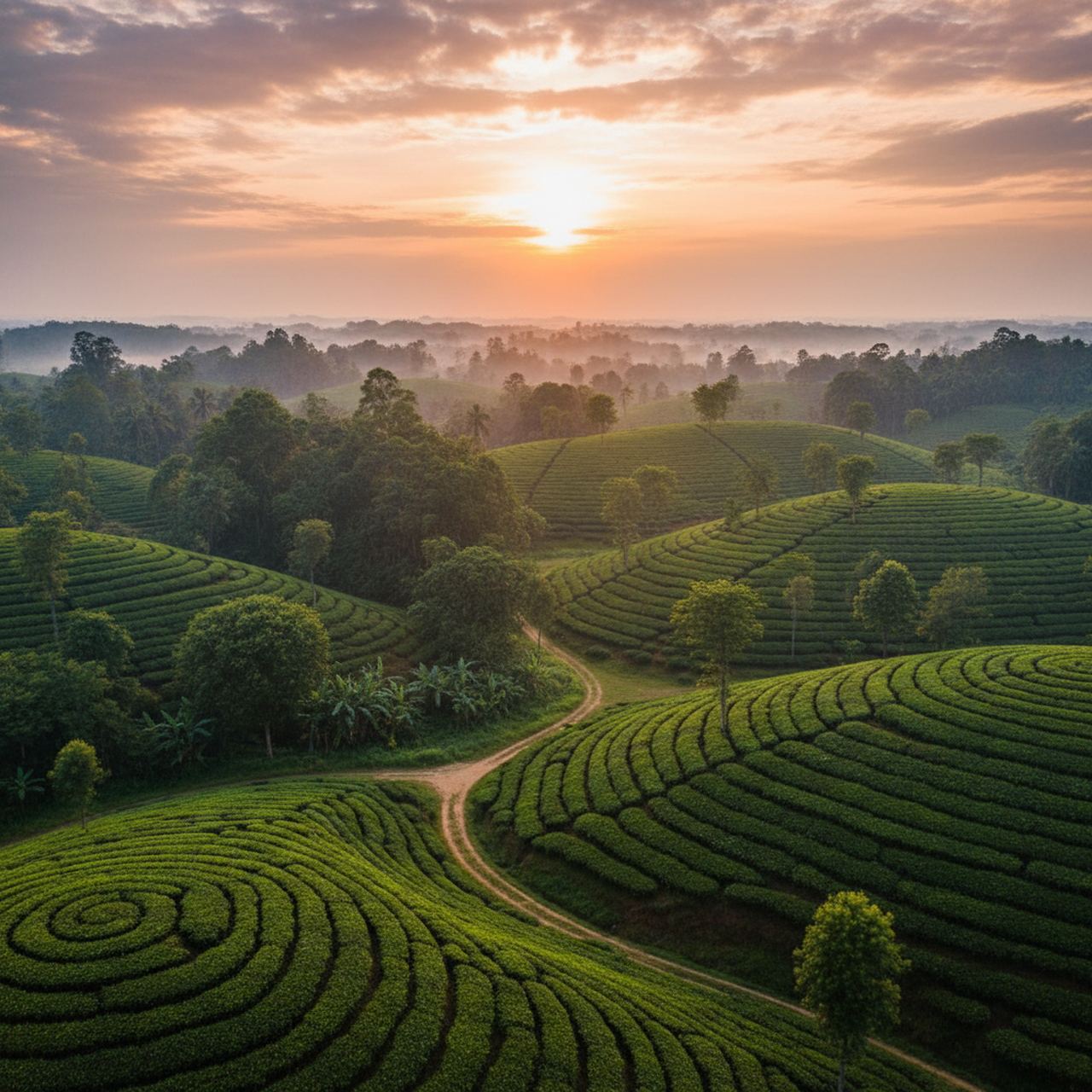
Srimangal Tea Gardens
Explore the undulating emerald hills of Bangladesh’s tea capital and the biodiversity of the surrounding ancient rainforests.
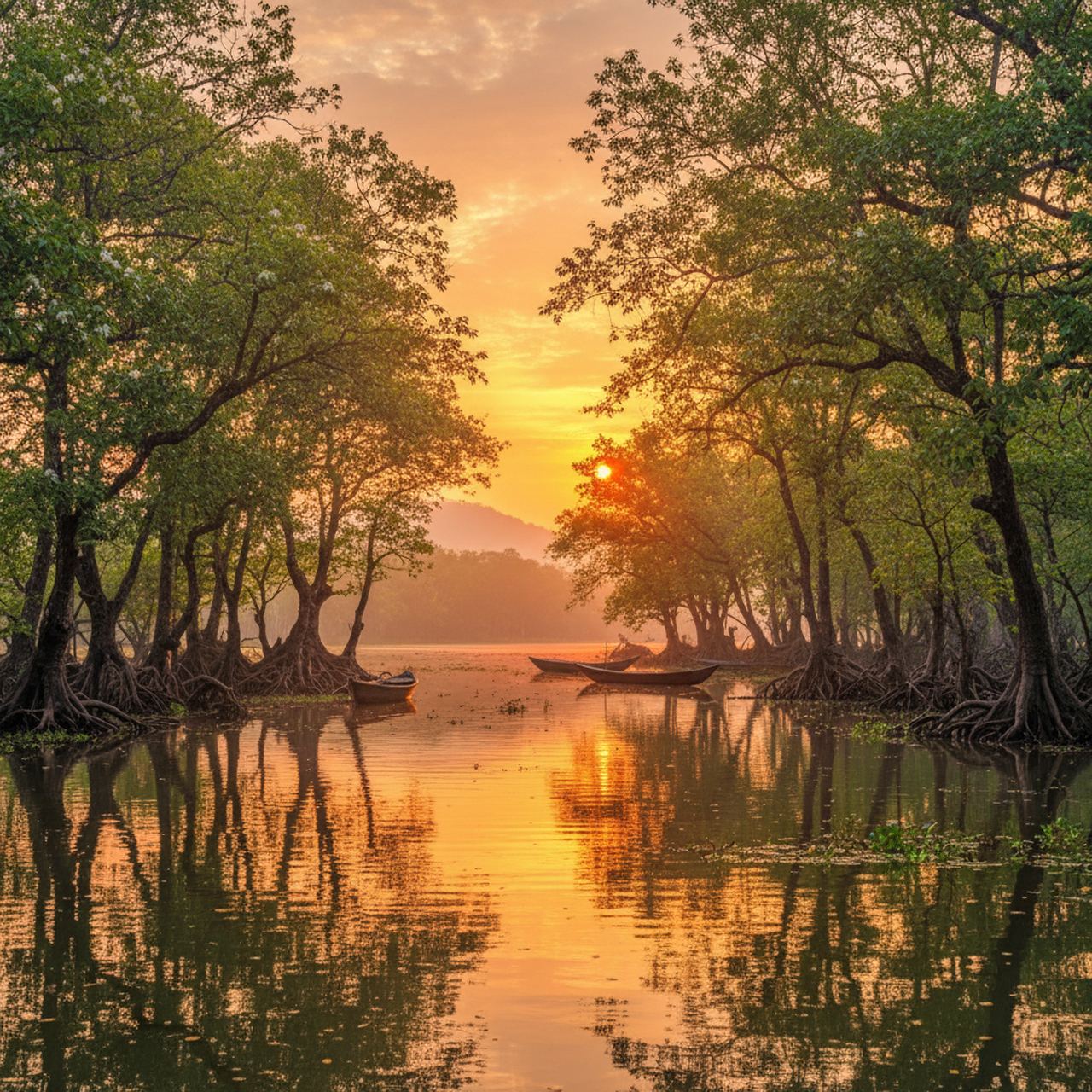
Ratargul Swamp Forest
Experience the 'Amazon of Bangla' in this ethereal freshwater swamp forest, where lush trees rise directly from the emerald waters.
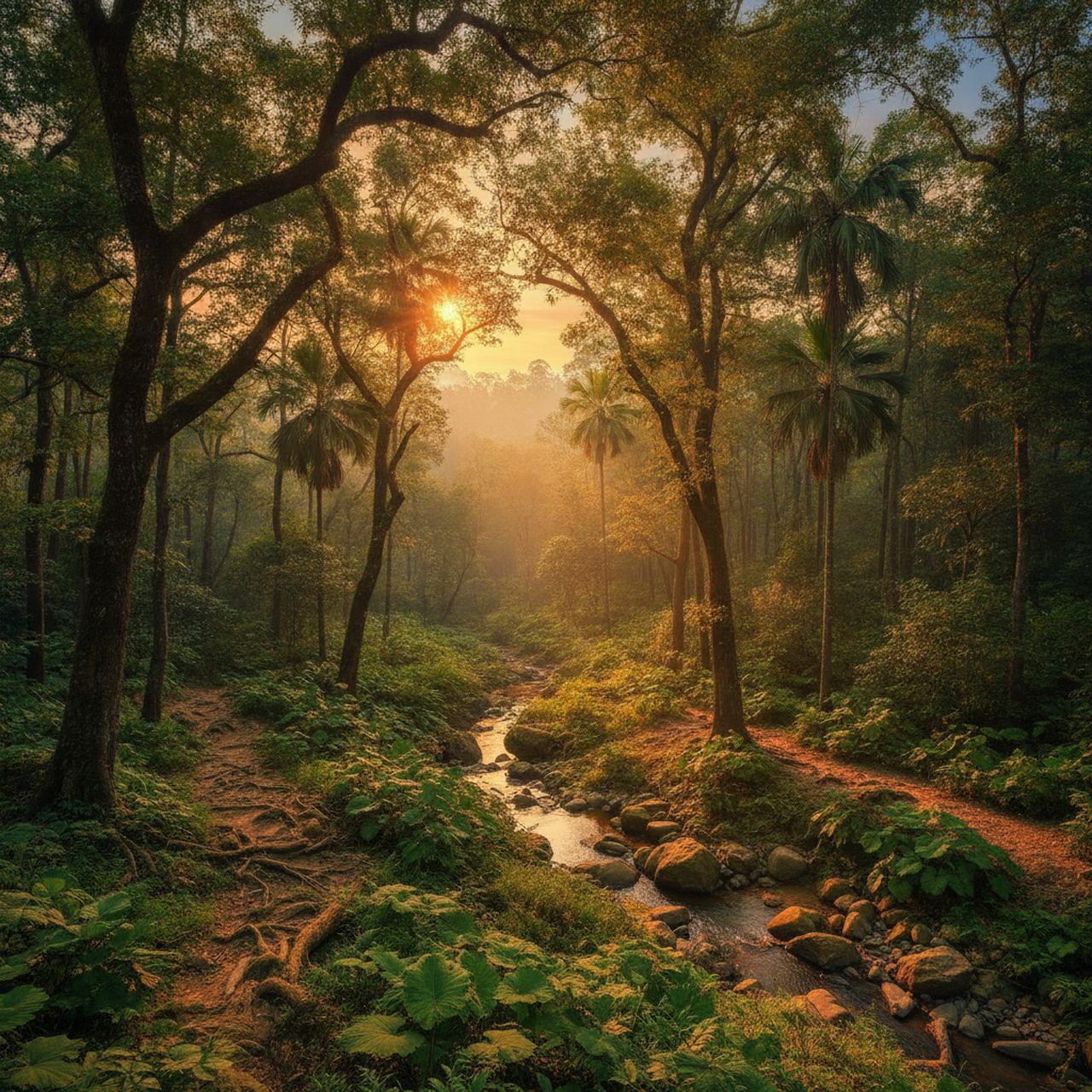
Lawachara National Park
Explore an emerald sanctuary of towering trees, rare Hoolock Gibbons, and misty trails in Bangladesh's premier rainforest destination.